Introduction
Frost inside a refrigerator can start as a small patch and quickly become a serious cooling problem. When ice covers vents or evaporator coils, cold air cannot circulate properly. As a result, food may become warmer, the compressor may run longer, and energy consumption can increase. This guide explains refrigerator repair for frost build problems, common mistakes, and practical fixes that can help restore normal cooling.
Frost does not always mean the refrigerator needs an expensive repair. Sometimes, the cause is simply a door that does not seal correctly. In other cases, a blocked drain, failed defrost heater, faulty thermostat, or damaged control component may be responsible. Therefore, identifying the cause before replacing parts is essential.
If you are looking for additional Refrigerator Repair For Tips, you can use this resource to explore related troubleshooting information. Understanding the basic causes can also help you avoid unnecessary service costs.
What Causes Frost to Build Up Inside a Refrigerator?
A refrigerator naturally produces moisture during normal cooling. Modern appliances use an automatic defrost system to control this moisture and prevent excessive ice. When that system works correctly, small amounts of frost are removed regularly.
However, several problems can interrupt this process. A damaged door gasket can allow warm, humid air to enter. Blocked air vents can create uneven temperatures. A clogged defrost drain can cause melted ice to freeze again.
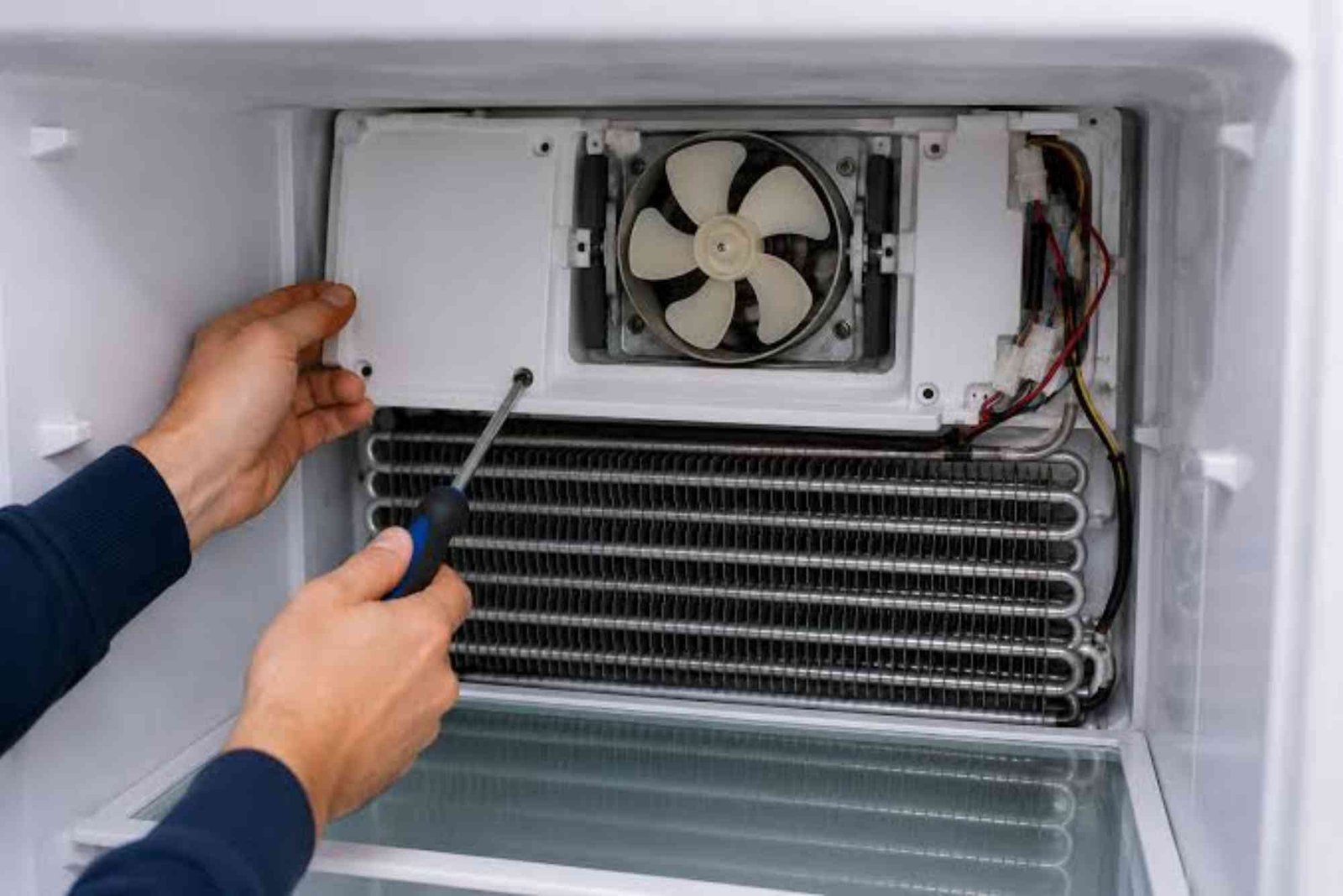
A failed defrost heater or thermostat can create another common problem. The evaporator coil then becomes covered with frost. Eventually, airflow becomes restricted, and the refrigerator section may become noticeably warmer. Repair sources also identify defrost components and door seals as important areas to inspect when frost repeatedly returns.

Refrigerator Repair for Frost Build: Common Mistakes
The first step in refrigerator repair for frost build is avoiding rushed repairs. Many homeowners remove the visible ice without investigating why it appeared.
Removing Ice Without Finding the Cause
Manual defrosting can provide temporary relief. However, it does not repair a faulty defrost system.
If the frost returns within days, something is still wrong. Repeatedly removing ice can waste time while the underlying component continues to fail.
Instead, observe where the frost appears. Frost around the door often suggests an air leak. Heavy frost covering the rear freezer panel may indicate an airflow or defrost problem.
Using Sharp Objects to Remove Ice
One of the most dangerous mistakes is breaking ice with a knife or screwdriver. Sharp tools can damage evaporator tubing hidden behind plastic panels.
A damaged refrigerant line can turn a simple frost problem into a major repair. Therefore, allow ice to melt naturally whenever possible.
For heavy buildup, unplug the appliance and follow the manufacturer’s defrost instructions. Keep water away from electrical components.
Ignoring the Door Gasket
The door gasket creates the seal that keeps warm air outside. When it becomes cracked, loose, twisted, or dirty, humid air can enter continuously.
That moisture freezes on cold surfaces and creates frost. A simple gasket inspection can therefore reveal an important cause.
Clean the gasket with mild soap and water. Then check whether it sits evenly against the refrigerator frame. If the seal remains damaged, replacement may be necessary.
Blocking Internal Air Vents
Food placed directly against refrigerator vents can restrict cold-air movement. This can create temperature differences between different areas.
A refrigerator may then work harder while some sections remain warm. Ice can also form around restricted airflow areas.
Keep vents clear and avoid tightly packing shelves. Proper airflow helps maintain consistent temperatures.
Replacing Expensive Parts Too Quickly
Another common mistake is replacing the control board immediately. A faulty board is possible, but simpler causes should be checked first.
Inspect the door seal, airflow, drain, fan, and visible frost pattern. If electrical testing is necessary, use the correct procedures for the appliance model.
Professional repair guidance recommends testing components such as the defrost heater and thermostat before assuming the control board is defective.
Quick Fixes for Refrigerator Frost Problems
Some frost problems can be addressed without replacing major components. Start with basic checks before moving toward electrical diagnosis.
Check the Door Seal
Close the refrigerator door and inspect the gasket around its entire perimeter. Look for gaps, cracks, hardened sections, or areas that have pulled away from the frame.
Clean dirt from the gasket and frame. Make sure bottles, shelves, or food containers are not preventing the door from closing fully.
A poor door seal allows warm moisture into the appliance. This moisture can freeze and create recurring frost.
Defrost the Refrigerator Safely
If ice is blocking vents, a complete manual defrost can restore airflow temporarily. Unplug the refrigerator before starting.
Remove perishable food and allow the ice to melt naturally. Place towels around the appliance to collect water.
Do not chip stubborn ice with sharp tools. Also, avoid applying excessive heat near plastic parts or electrical wiring.
After defrosting, reconnect the refrigerator and allow it to reach its normal operating temperature.
Check the Defrost Drain
A clogged defrost drain can cause water to collect and freeze. The drain is commonly located beneath the evaporator area, although its position varies by model.
If accessible, clear the drain using an appliance-approved method. Warm water can help melt small ice blockages.
Avoid forcing tools deep into the drain. Internal components can be damaged if excessive pressure is used.
A recurring drain blockage may require a deeper inspection. Some refrigerators also use drain straps or other components to help prevent freezing.
Inspect the Evaporator Fan
The evaporator fan distributes cold air throughout the appliance. If the fan stops working, cold air circulation can become poor.
Listen for unusual noises when the refrigerator is operating. A clicking, grinding, or silent fan can indicate a problem.
Disconnect power before accessing internal components. If the fan motor requires electrical testing, follow the manufacturer’s service instructions.
Check the Defrost Heater and Thermostat
The defrost heater melts frost from the evaporator during the automatic defrost cycle. The thermostat helps determine when the heater should operate.
If either component fails, frost can gradually cover the evaporator coil. Airflow then becomes restricted.
Testing these parts generally requires access to internal components and a multimeter. If you are not comfortable working around electrical connections, professional service is safer.
How to Identify the Frost Pattern
The location and appearance of frost can provide useful clues. However, frost patterns should not be treated as a final diagnosis.
A thin layer of frost may occur during normal operation. Heavy frost covering a large evaporator area can indicate a defrost problem.
Frost around the door opening commonly points toward a sealing or moisture issue. Frost concentrated around an air vent may indicate restricted airflow.
If the freezer is cold but the refrigerator compartment is warm, inspect the evaporator fan and airflow passages. Ice-covered evaporator coils can also prevent cold air from reaching the refrigerator section.
Refrigerator Repair for Frost Build: When Professional Help Is Needed
Basic troubleshooting is useful, but not every repair should be handled at home. Electrical components can create shock hazards when handled incorrectly.
Call a qualified technician when frost repeatedly returns after complete defrosting. Professional help is also appropriate when the compressor runs continuously, the refrigerator cannot maintain safe temperatures, or electrical components need testing.
A technician can check the defrost heater, thermostat, timer, control board, fan motor, wiring, and related components. Proper diagnosis is especially important because several different failures can create similar symptoms.
Before ordering replacement parts, record the refrigerator’s brand and complete model number. Parts can vary significantly between models.
For more information, you can Learn How Refrigerator Repair Guide and compare the symptoms with the likely causes.
How to Prevent Frost From Returning
Prevention is often easier than repeated repair. Keep the refrigerator door closed as much as possible. Check the gasket periodically and clean it when necessary.
Avoid placing hot food directly inside the refrigerator. Allow food to cool appropriately before storage.
Do not overfill shelves or block vents. Good airflow helps the appliance maintain stable temperatures.
Also, keep the refrigerator level and maintain adequate space around the appliance. Follow the manufacturer’s cleaning and maintenance recommendations. For another related resource, you can explore this Related read on travelsflax.com about Refrigerator Repair For Frost.
If the refrigerator develops heavy frost repeatedly, do not ignore it. Early diagnosis can prevent airflow restrictions and additional cooling problems.
FAQ:
Why is my refrigerator not defrosting and building up frost?
A failed defrost heater, thermostat, timer, or control board can prevent automatic defrosting. A damaged door gasket can also introduce excess moisture.
The best approach is to identify the frost pattern and inspect simple causes first. Persistent frost usually requires component testing.
Why is my freezer cold but my fridge warm?
Restricted airflow is a common possibility. Heavy frost on the evaporator can block cold air from reaching the refrigerator compartment.
A failed evaporator fan can create similar symptoms. Blocked vents should therefore be checked before replacing parts.
How do I unclog a refrigerator defrost drain?
First, disconnect the refrigerator from power. Remove accessible ice around the drain and use an appropriate method to clear the opening.
Do not push sharp objects deeply into the drain. If the blockage repeatedly returns, the underlying drainage or defrost system may need professional inspection.
Can a bad door gasket cause frost buildup?
Yes. A damaged gasket can allow warm, humid air to enter the refrigerator. That moisture can condense and freeze on cold surfaces.
Inspect the gasket for gaps, cracks, or deformation. Replace it if cleaning and proper positioning do not restore a tight seal.
How do I know if my refrigerator needs repair?
Repeated frost, poor cooling, unusual fan noises, water accumulation, or continuous compressor operation are warning signs.
If a complete defrost only solves the problem temporarily, the underlying fault should be diagnosed.
Final Thoughts on Refrigerator Repair for Frost Build
Effective refrigerator repair for frost build starts with understanding the cause instead of simply removing visible ice. Door seals, airflow, defrost drains, evaporator fans, heaters, and thermostats can all influence frost formation.
Related Reading: Zhongke Construction Technology Concrete Prefab: Common Mistakes and Quick Fixes
Related Reading: dont miss out on laifen: Common Mistakes and Quick Fixes — full guide
Related Reading: The Impact Of Offplan Developments: Common Mistakes and Quick Fixes — full guide
Related Reading: i co sign a mortgage: Common Mistakes and Quick Fixes — full guide
Related Reading: How Fam Properties Stands Out: Common Mistakes and Quick Fixes — full guide
Related Reading: Aster Clinic Al Muteena Deira: Common Mistakes and Quick Fixes — full guide