Introduction
Summer heat puts extra pressure on an air conditioner. When an AC system runs for long hours, even a small airflow problem can cause the evaporator coil to become extremely cold. Eventually, moisture on the coil freezes into ice. Understanding simple ways to improve prevent AC coil freezing in summer fast can help homeowners protect their cooling system and maintain comfortable indoor temperatures.
A frozen AC coil is more than an inconvenience. It can reduce cooling performance, increase energy consumption, and place unnecessary stress on the compressor. Fortunately, many common causes can be addressed with basic maintenance and timely professional service.
The key is to identify why the coil is freezing instead of simply removing the ice. Turning the system off may melt the ice temporarily, but the underlying issue can return. Therefore, homeowners should focus on airflow, filters, thermostat settings, refrigerant levels, and general system condition.
Why AC Coils Freeze During Summer
An evaporator coil should remain cold enough to absorb heat from indoor air. However, it should not become cold enough to freeze the moisture that naturally forms on its surface. When airflow or refrigerant conditions become abnormal, the coil temperature can drop too far.
One of the most common reasons is restricted airflow. A dirty air filter can prevent enough warm indoor air from reaching the evaporator coil. As a result, the coil remains colder than it should, and ice begins developing.
Low refrigerant can create a similar problem. Refrigerant absorbs heat as it moves through the evaporator. If the refrigerant charge is too low because of a leak or another system problem, pressure can fall and cause the coil temperature to drop.

Dirty coils can also interfere with proper heat transfer. Dust and debris act like an insulating layer. Consequently, the system may struggle to absorb heat efficiently, increasing the possibility of freezing.
Simple Ways to Improve Prevent AC Coil Freezing in Summer Fast
The fastest way to prevent AC coil freezing in summer fast is to maintain unrestricted airflow. Start by checking the indoor air filter. If it looks heavily covered with dust, replace it with the correct filter recommended for your system.
A clean filter allows more air to move through the evaporator coil. This helps the coil maintain an appropriate operating temperature while improving overall cooling performance.
However, the filter is not the only airflow component worth checking. Closed supply vents, blocked return vents, dirty blower components, and damaged ductwork can also reduce circulation.
Keeping furniture, curtains, boxes, and other objects away from vents can improve airflow. Likewise, return-air grilles should remain open and unobstructed throughout the cooling season.
For homeowners looking for practical maintenance information, Prevent Ac Coil Tips can provide another useful resource for understanding common causes and prevention methods.
Replace Dirty AC Filters Regularly
A dirty filter is one of the easiest AC problems to overlook. During periods of heavy summer use, dust can accumulate quickly. When the filter becomes clogged, the blower cannot move enough air through the system.
Reduced airflow lowers the amount of warm air passing over the evaporator coil. The coil can then become excessively cold, eventually forming ice.
Filter replacement schedules vary depending on the filter type, indoor air quality, pets, and system usage. Therefore, it is better to inspect the filter regularly instead of relying only on a fixed calendar.
If the filter appears dirty or airflow has noticeably weakened, replacing it may be an appropriate first step. After replacement, allow the system to operate normally and observe whether cooling performance improves.
Keep Airflow Around the Indoor Unit Clear
Airflow problems can exist even when the filter is clean. Indoor vents and return grilles must have enough open space to allow air to circulate correctly.
Avoid placing large furniture directly in front of supply vents. Also, do not cover return-air grilles with curtains or household items.
Poor airflow can cause the evaporator coil to remain colder for longer periods. Over time, this may contribute to ice formation.
Checking airflow is therefore one of the most practical ways to prevent AC coil freezing in summer fast without immediately assuming that the system needs major repairs.
Check the Thermostat Setting
Extremely low thermostat settings can place unnecessary demand on an air conditioner. Setting the temperature far below the outdoor temperature does not necessarily cool a room faster.
Instead, the system may run continuously while struggling with airflow or other underlying issues. A reasonable summer temperature can help the system maintain a more stable operating cycle.
The thermostat should also be positioned away from direct sunlight, hot appliances, and other heat sources. A poorly positioned thermostat can receive inaccurate temperature readings and cause unwanted cycling.
If the thermostat display behaves strangely or the system does not respond correctly, professional inspection may be necessary.
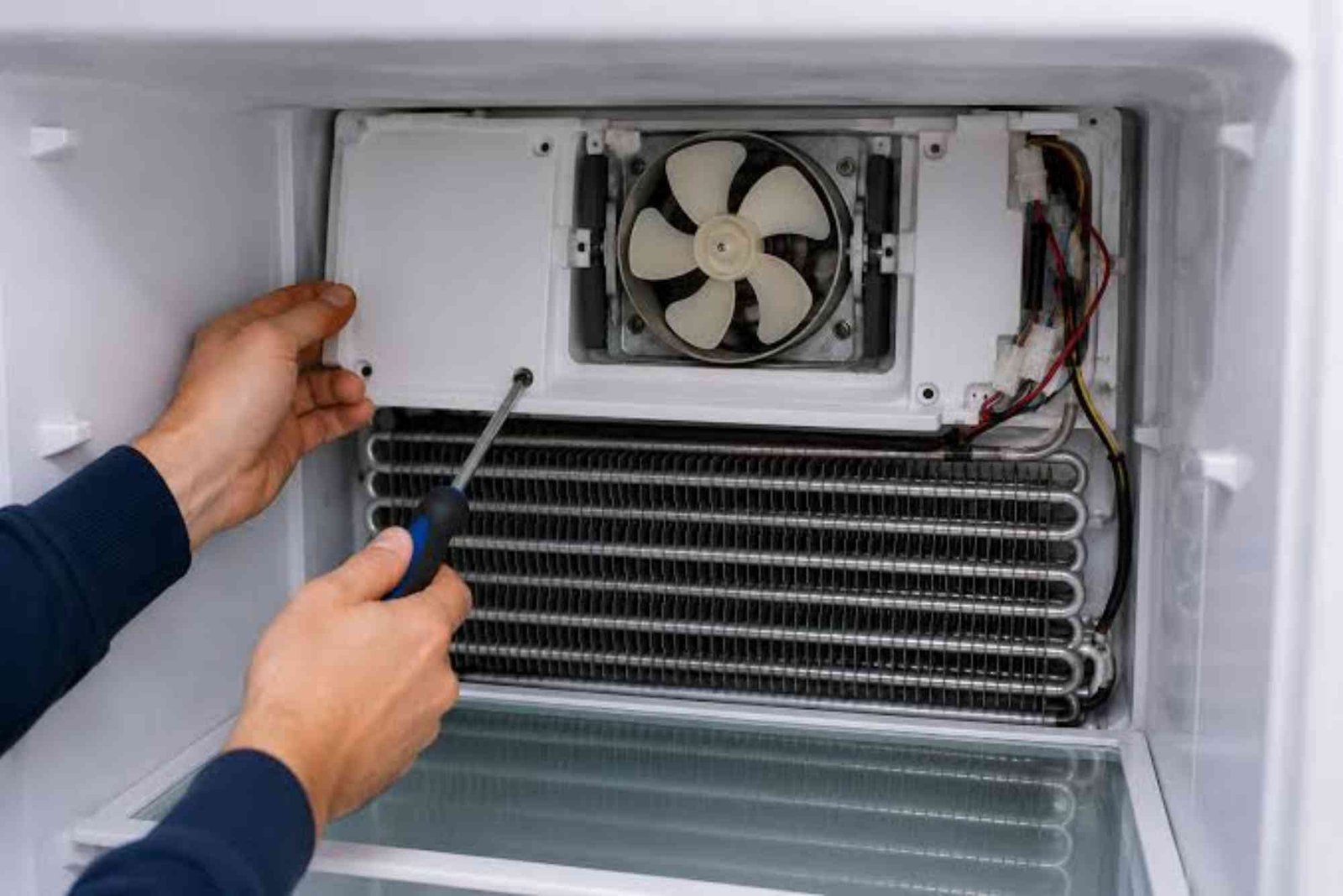
Keep the Evaporator Coil Clean
The evaporator coil absorbs heat from indoor air. When dirt builds up on the coil, heat transfer becomes less efficient.
A dirty coil can contribute to reduced airflow and abnormal operating conditions. Therefore, coil cleanliness should be part of regular AC maintenance.
However, homeowners should be careful when attempting to clean internal AC components. Evaporator coils contain delicate fins and may be difficult to access safely.
Using excessive pressure or unsuitable chemicals can damage the coil. For that reason, professional cleaning is often the safer option when the coil is heavily contaminated.
Check for Low Refrigerant
Refrigerant plays an essential role in the cooling cycle. An AC system does not normally consume refrigerant like fuel. Therefore, a low refrigerant level can indicate a leak or another mechanical issue.
Low refrigerant may cause the evaporator coil to become unusually cold. Ice can then develop around the coil or refrigerant lines.
Adding refrigerant without finding the cause is not a complete solution. A qualified technician should inspect the system for leaks and verify the correct refrigerant charge.
Homeowners should never attempt to handle refrigerant without appropriate equipment, training, and authorization. Refrigerant systems require careful pressure measurements and proper procedures.
Turn Off the AC When the Coil Is Frozen
If you notice thick ice around the indoor unit or refrigerant lines, continuing to run the AC can make the situation worse.
Turn the cooling function off and allow the ice to melt naturally. Running the blower fan may help circulate air, depending on the system and its condition.
Do not use sharp tools, boiling water, or open flames to remove the ice. These methods can damage coils, tubing, wiring, or other components.
Once the ice has completely melted, inspect the filter and airflow. If the system freezes again, professional diagnosis is recommended.
Repeated freezing usually means that an underlying problem has not been resolved. Simply melting the ice does not correct refrigerant, airflow, electrical, or mechanical faults.
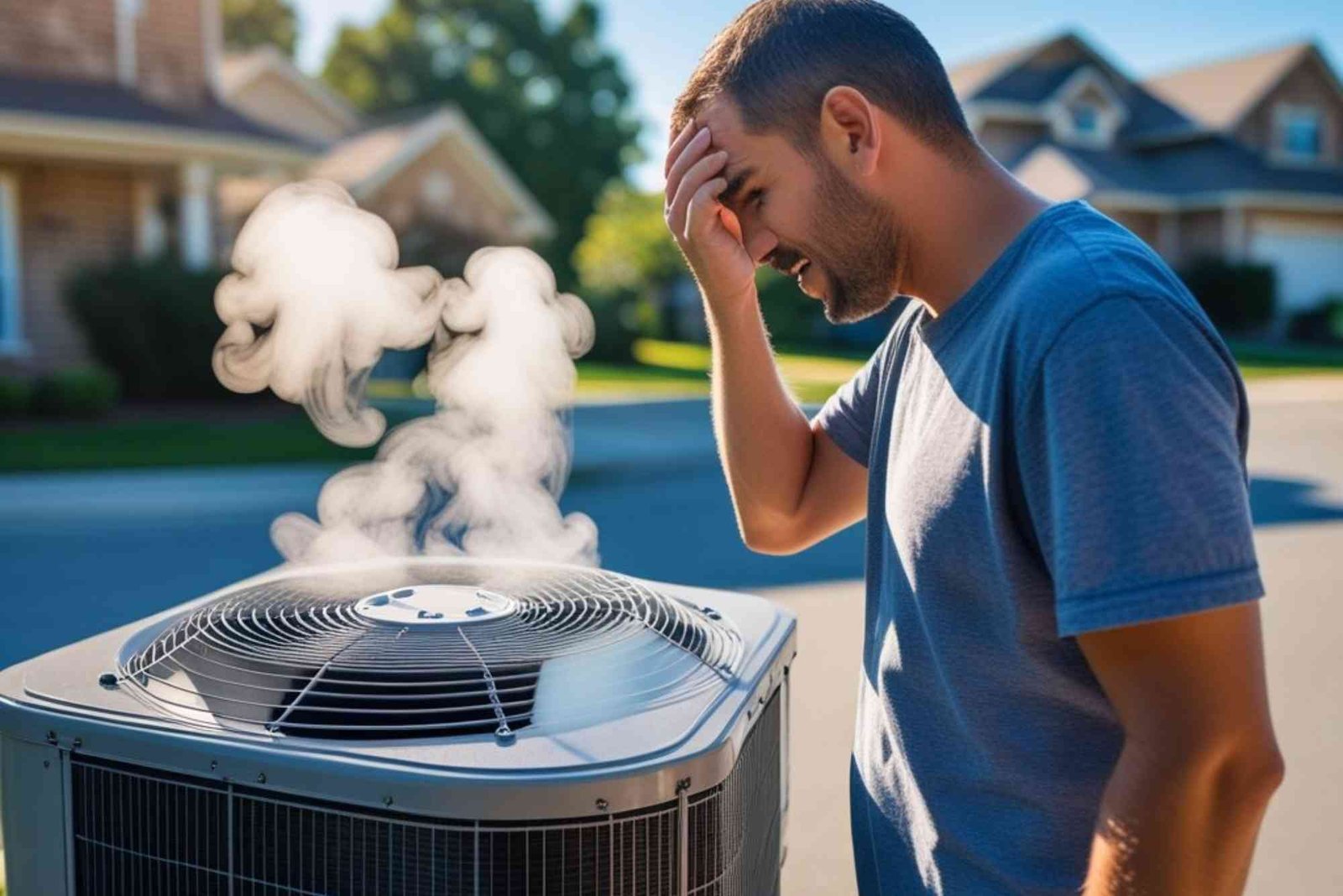
Inspect the Outdoor Condenser
Although freezing often occurs at the indoor evaporator coil, outdoor condenser conditions also affect AC performance.
The outdoor unit needs sufficient space to release heat. Leaves, grass, dirt, and other debris can restrict airflow around the condenser.
Keep the area surrounding the outdoor unit reasonably clear. However, avoid bending condenser fins or spraying the unit with excessive water pressure.
A restricted outdoor condenser may cause the system to operate inefficiently. Regular professional maintenance can help identify problems that are difficult to see during a basic visual inspection.
Do Not Ignore Weak Airflow
Weak airflow is an important warning sign. If some rooms receive noticeably less air than others, the issue may involve ductwork, blower performance, dampers, filters, or other components.
A gradual reduction in airflow can be easy to ignore during summer. Nevertheless, restricted circulation can affect coil temperature and overall cooling efficiency.
Homeowners should pay attention to changes in airflow rather than waiting until ice appears. Early maintenance can often prevent a small issue from becoming a larger repair.
Those who want to Learn How Prevent Ac Guide can also explore additional information about maintaining proper cooling performance during hot weather.
Schedule Preventive AC Maintenance
Preventive maintenance is one of the most reliable ways to prevent AC coil freezing in summer fast. A professional technician can inspect components that homeowners may not be able to access safely.
A typical maintenance visit can include checking airflow, electrical connections, refrigerant pressure, coils, drainage, blower operation, and other important components.
Regular servicing is particularly valuable before the hottest part of summer. Finding a weak component early can reduce the chance of unexpected breakdowns during extreme temperatures.
Maintenance also supports energy efficiency. When an AC system operates under the correct conditions, it generally does not need to work harder than necessary to maintain indoor comfort.
Why an AC Drain Problem Can Matter
The evaporator coil naturally produces condensation as warm indoor air passes over its cold surface. This moisture normally drains away through the condensate system.
If the drain becomes clogged, water can accumulate around the indoor unit. While a drain blockage does not directly cause every frozen coil problem, it can indicate that the system needs attention.
Moisture, algae, dirt, and debris can affect condensate drainage. Regular inspection helps keep the drainage system functioning correctly.
If water leaks from the indoor unit, switch off the system if necessary and arrange professional inspection. Water near electrical components can create additional risks.
Common Mistakes That Cause AC Freezing
One common mistake is continuously lowering the thermostat when the room does not cool quickly. This does not solve airflow or refrigerant problems.
Another mistake is ignoring a dirty filter for too long. A filter may appear usable from a distance while still restricting airflow significantly.
Some homeowners also remove visible ice and immediately restart the AC. If the cause remains unresolved, the coil can freeze again within hours.
Using incorrect filters can create problems as well. A filter with excessive resistance may restrict airflow even when it is brand new.
Finally, attempting refrigerant repairs without proper knowledge can create safety and equipment risks. Refrigerant-related work should be handled by a qualified professional.
How to Prevent AC Coil Freezing in Summer Long Term
Long-term prevention begins with consistent maintenance. Inspect filters regularly and replace them when necessary. Keep vents and return grilles unobstructed throughout the cooling season.
It is also useful to monitor changes in cooling performance. Unusual noises, weak airflow, longer cooling cycles, water leakage, or repeated freezing should not be ignored.
Professional maintenance can identify problems before they cause serious system damage. This approach is usually more effective than waiting for the AC to stop working completely.
For additional automotive and lifestyle reading related to cooling and maintenance topics, you can explore this Related read on walkndrive.com about Prevent Ac Coil Freezing.
Frequently Asked Questions
Why does my AC coil keep freezing?
An AC coil may repeatedly freeze because of restricted airflow, a dirty filter, low refrigerant, dirty coils, blower problems, or other mechanical issues. The exact cause should be diagnosed rather than assuming that ice itself is the main problem.
How do I stop my AC coil from freezing?
Start by checking the air filter and ensuring that vents and return grilles are unobstructed. If the coil continues freezing after airflow is restored, professional inspection can identify refrigerant or mechanical problems.
Can a dirty air filter cause an AC coil to freeze?
Yes, a severely dirty filter can restrict airflow. Reduced airflow may lower the evaporator coil temperature enough to cause ice formation.
Should I turn off my AC if the coil freezes?
Yes, turning off cooling allows the ice to melt and prevents continued operation under abnormal conditions. Avoid removing ice with sharp objects or high heat.
How long does it take for a frozen AC coil to thaw?
Thawing time depends on the amount of ice, indoor temperature, airflow, and system design. A heavily frozen coil may take several hours to thaw completely.
Can low refrigerant cause an AC coil to freeze?
Yes, low refrigerant can reduce system pressure and cause the evaporator coil to become excessively cold. A qualified technician should check for leaks and confirm the correct refrigerant charge.
Conclusion
Learning simple ways to improve prevent AC coil freezing in summer fast can help homeowners maintain better cooling and avoid unnecessary system stress. The most important steps include maintaining clean filters, protecting airflow, keeping coils clean, monitoring refrigerant issues, and scheduling professional maintenance.
Finding reliable businesses and useful services online is easier when you have access to a trusted business directory. A well-organized platform can help users discover companies, compare available services, and find contact information quickly. Whether you are searching for local providers, professional services, or growing businesses, Bussinessfinder.com offers a convenient starting point for exploring different business options and making informed choices.
Related Reading: Simple Ways to Improve Washing Machine Keeps Filling with Water Fast
Related Reading: Simple Ways to Improve There a Permanent Cure for BPH Fast — full guide